Bog Oak objects
Material-led desk objects, knife-handle applications, and decorative forms.
Continue
Material study 001
Bog Oak is ancient oak transformed through an extraordinary natural journey: forest, river, submersion, time, recovery, and specialized preparation.

Ancient oak trees once grew across the forested continental regions of Eurasia. Through natural events, some entered rivers and remained submerged beneath water and sediment.
Relic Timber's material is Eurasian in origin. References to the United States describe a commercial market—not the place where the oak grew.
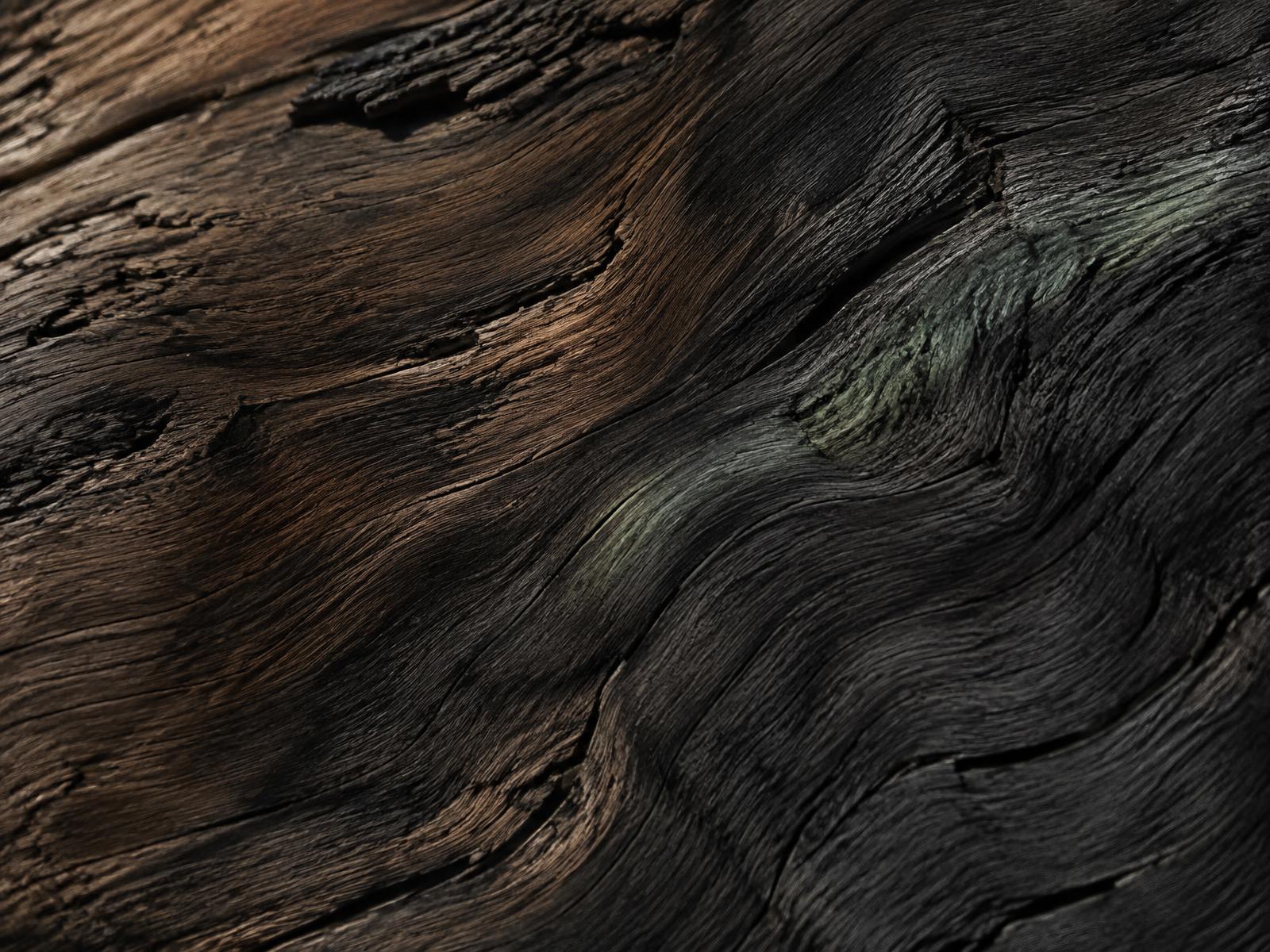
River to relic
Time becomes visible.
The complete material journey
Oak once stood in the forested continental regions of Eurasia.
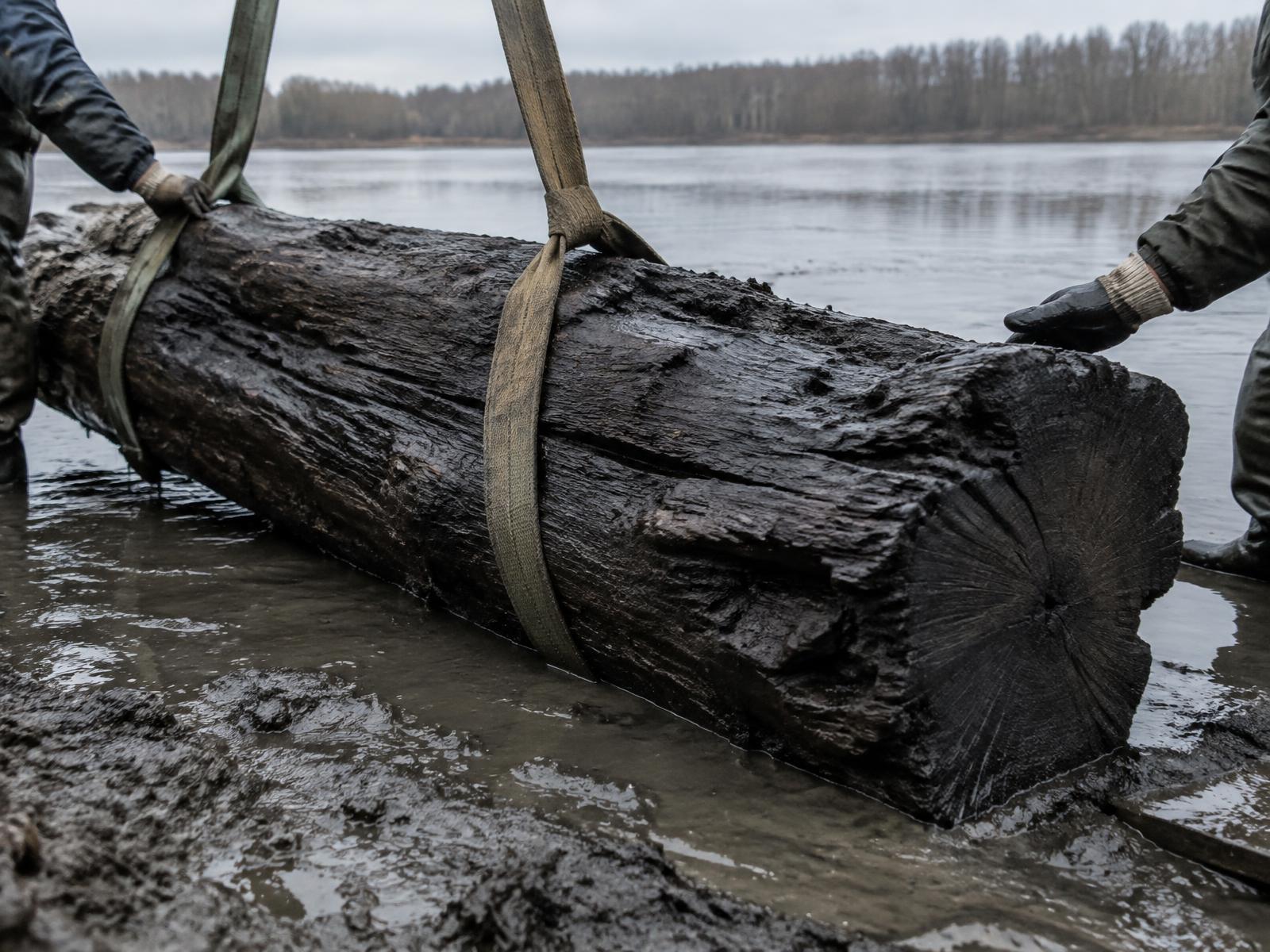
Natural events carried some trees into rivers, where unusual conditions preserved them.
Centuries and millennia passed beneath the water and river sediment.
Color, structure, and working character changed profoundly within the material.
The ancient timber is carefully brought back from the river.
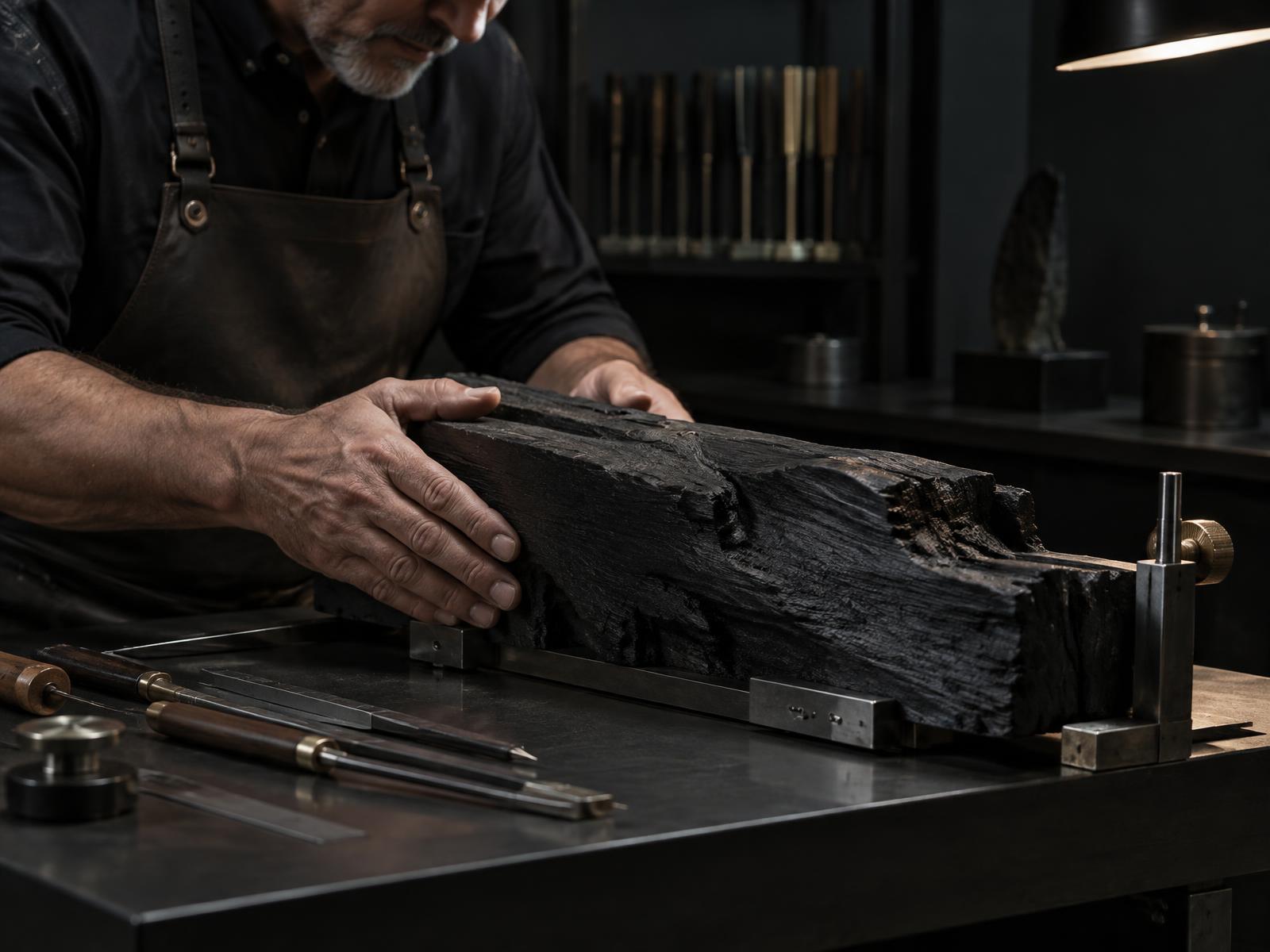
Selection, stabilization, drying, storage, and precise machining prepare it for use.
Only then can the material become an object worthy of its history.
Natural transformation
Over hundreds and thousands of years, appearance, structure, color, and working characteristics become fundamentally different from ordinary freshly cut oak.
The dark character develops within the material rather than through conventional black paint. Exceptionally rare material may contain green-toned streaking.
Bog Oak may exhibit characteristics associated with a long process of natural mineral transformation. It remains wood—not stone—and broad scientific absolutes would misrepresent it.
Recovery reveals the material, but it does not make it ready for use. What follows determines whether its history can become a viable object.
Time creates the material.
Craft determines what becomes of it.
10 — Preparation
Correct storage, stabilization, and drying can require extended periods of time. Depending on material and condition, preparation may take years rather than weeks.
During cutting and machining, ancient Bog Oak can behave differently from conventional lumber and may chip when approached incorrectly. Tool selection, cutting direction, speed, feed, preparation, and material condition all matter. The expertise is communicated; proprietary parameters remain private.
Where the journey leads
Begin a conversation
Ask about Bog Oak, a potential application, or a commercial material requirement.