Ancient Eurasian Bog Oak
Relic
Timber
Bog Oak. Shaped by Time.
Ancient oak, preserved and transformed through millennia, recovered from rivers and prepared for exceptional objects and projects.
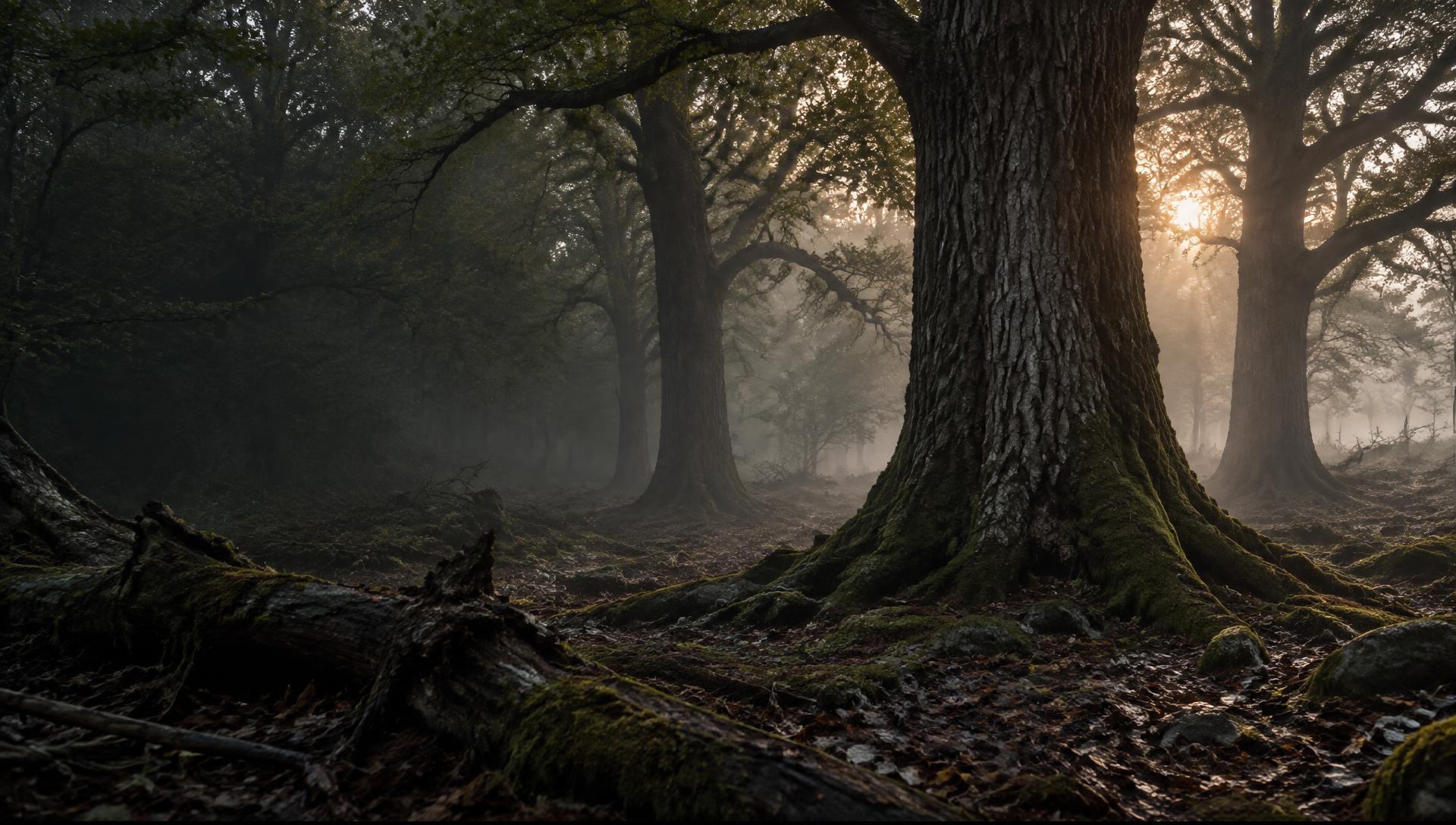
Born in the forests of Eurasia.
The story begins in the continental forest regions of Eurasia, where ancient oak trees once grew before natural events carried some of them into rivers.
This is not contemporary American-grown oak. The United States is a potential commercial market; the geographic origin of the material is Eurasian.

River to relic
Time becomes visible.
Seven chapters
- 0101 / 07
Forest
Oak once stood in the forested continental regions of Eurasia.
- 0202 / 07
River
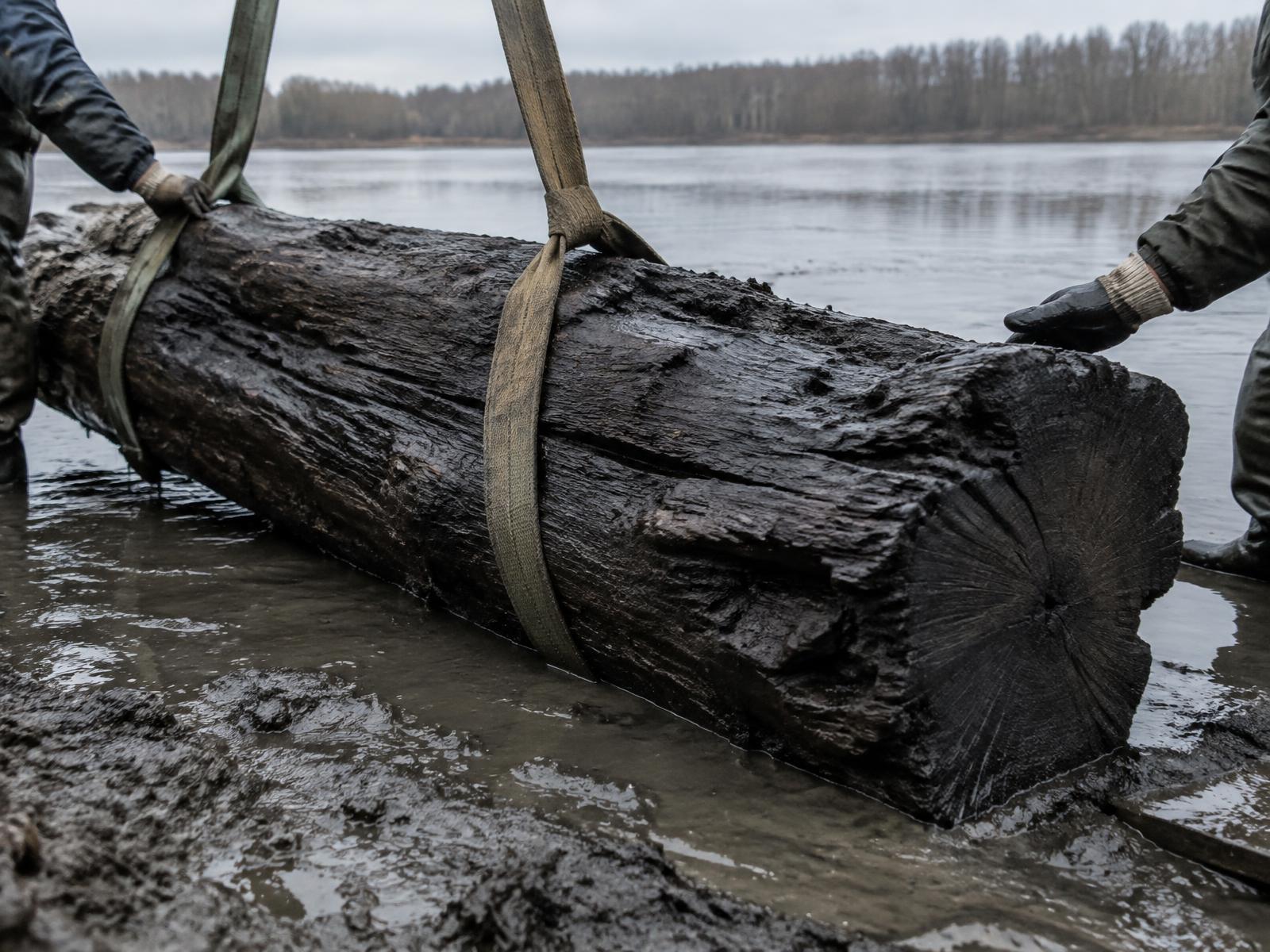
Natural events carried some trees into rivers, where unusual conditions preserved them.
- 0303 / 07
Time
Centuries and millennia passed beneath the water and river sediment.
- 0404 / 07
Transformation
Color, structure, and working character changed profoundly within the material.
- 0505 / 07
Recovery
The ancient timber is carefully brought back from the river.
- 0606 / 07
Preparation
Selection, stabilization, drying, storage, and precise machining prepare it for use.
- 0707 / 07
Object
Only then can the material become an object worthy of its history.
6,000
Years — selected specimens
Some material can date back several thousand years; selected specimens may reach approximately 5,000–6,000 years in age. Not every piece is the same age or individually dated.
09 — Transformation
Not stained.
Transformed.
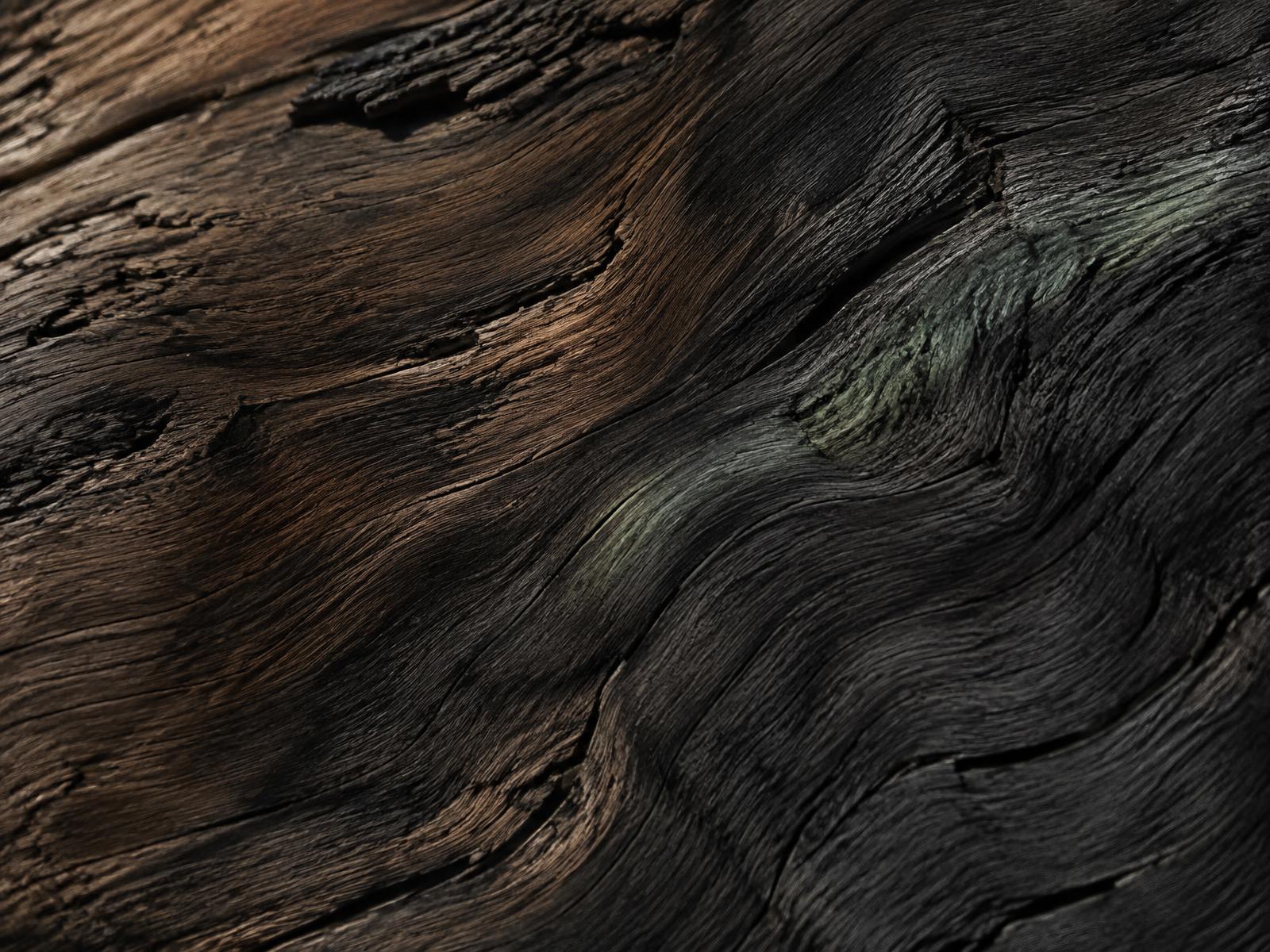
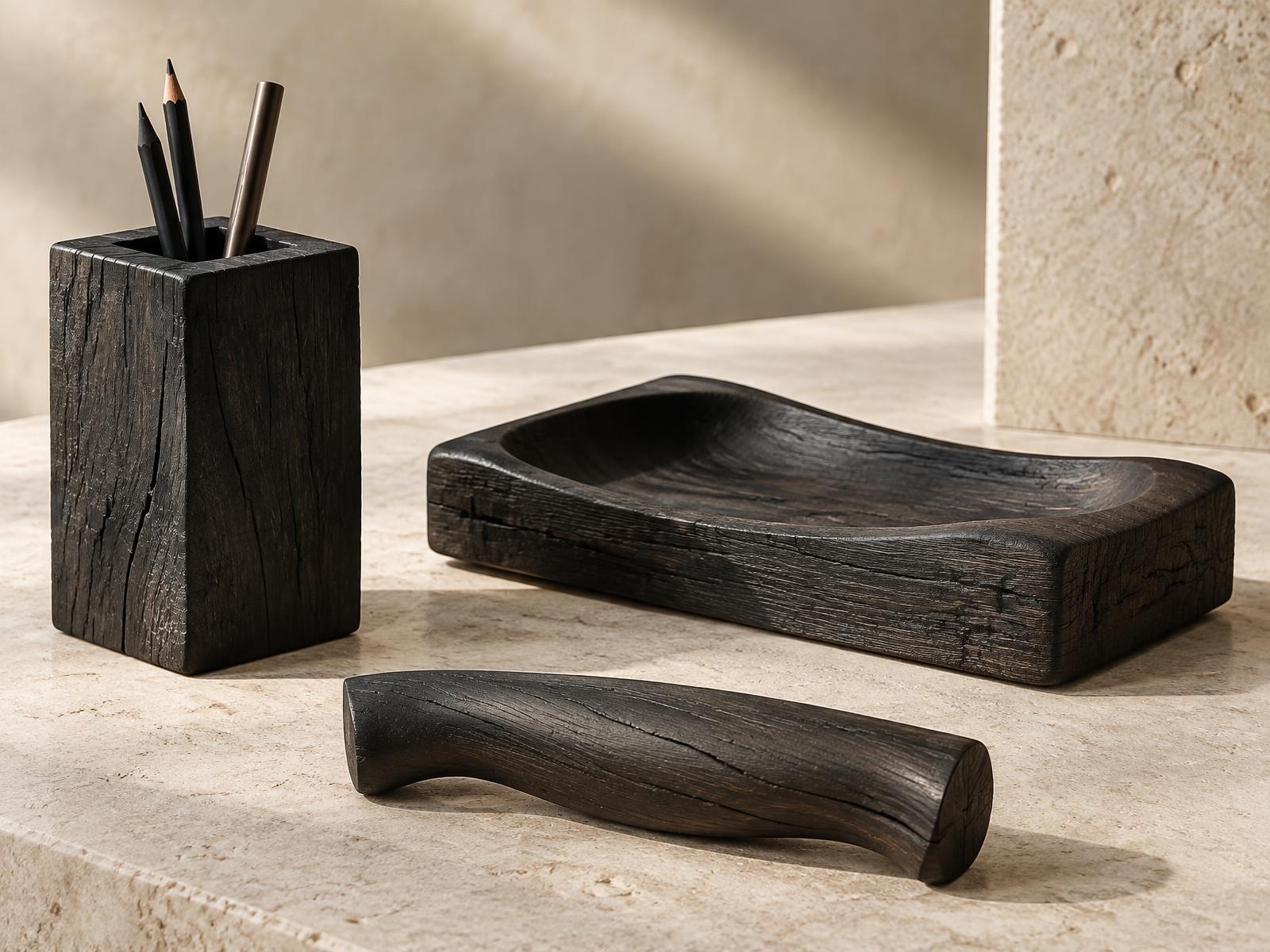
Through millennia beneath the water, the timber develops a natural character that can range from brown to deep black. Exceptionally rare material may show green-toned streaking.
The dark coloration belongs to the material itself—not an ordinary black coating applied to freshly cut timber.
10 — Recovery & preparation
Recovery is only the beginning.
Ancient Bog Oak must be selected, stabilized, dried, stored, cut, and machined with care. Depending on the material and its condition, preparation may take years rather than weeks.
Tooling, cutting direction, speed, feed, and material condition all matter. Poor technique can damage something irreplaceable.
Time → Material → Craft → Object
The final form is only the last chapter.
Current directions include desk objects, knife-handle material, decorative pieces, and custom work.
12 — Custom projects
Made for the object that does not yet exist.
Private commissions, designer collaborations, maker components, and limited production runs can begin with a conversation.
13 — Material supply
Ancient Bog Oak for makers & manufacturers.
Relic Timber welcomes commercial material inquiries as it develops supply for the United States market. Origin remains Eurasian.
Begin a conversation
Have a project in mind?
Tell us about the object, material, or collaboration you are considering.